




Introduction
Automation of life has become an integral part of modern society, changing our daily existence thanks to innovative solutions in the field of robotics. Thanks to the development of artificial intelligence and automation technologies, new opportunities are emerging that increase efficiency, convenience and safety in many aspects of life. In this article, we will analyze how robotics is transforming various areas of activity and what significance it has for our future.
Fundamentals of Robotics and Automation
What is robotics?
Robotics is an interdisciplinary field that combines knowledge from mechanics, electronics, computer science and artificial intelligence. It deals with the design, creation and use of robots. In the modern world, robots play an important role in the automation of production and the provision of services, using advanced technologies to perform a variety of tasks. Here are some of the main areas of robotics:
- Industrial robotics: workers performing tasks in production environments.
- Service robotics: work to perform tasks in home and office environments.
- Medical robotics: jobs that assist in performing surgical operations or in the rehabilitation of patients.
Basic principles of life automation
Automation of life includes various aspects that simplify tasks and increase their productivity. The basic principles of automation include:
- Integrating different systems to meet user needs.
- Using sensors and actuators to collect data and execute commands.
- Ability to self-learn and adapt to changing conditions.
All these elements allow you to create effective solutions that affect various areas of social life. Daily automation can include energy management, home security monitoring, and controlling household appliances via mobile applications.
Application of automation in various fields
Industry and manufacturing
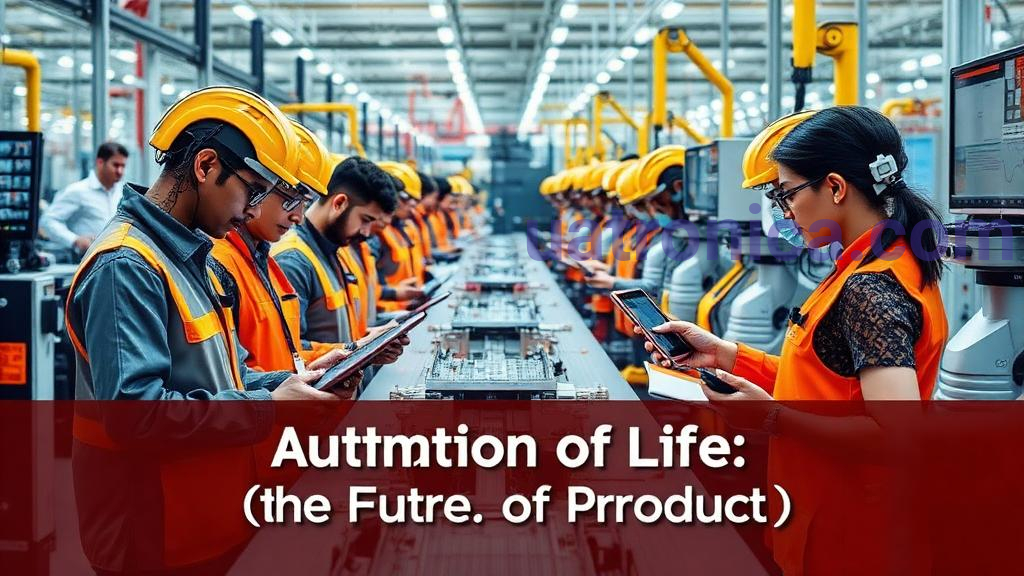
In industry, automation allows you to optimize production processes, reducing the human factor that fixes errors. The integration of automated systems into the production line provides:
- Reduced production costs.
- Improving product quality.
- Reducing risks for workers.
For example, automated conveyor systems, such as those used in the automotive industry, demonstrate significant efficiencies compared to traditional manufacturing methods. Also, the use of robots in warehouses that pack goods allows for process optimization.
Services and household chores
In the service sector, automation of life is embodied through various household robots, such as vacuum cleaners, washing machines with intelligent functions and home management systems. These solutions help save consumers' time and energy, allowing them to focus more on important aspects of daily life. According to research, household robots can reduce housework time by 40%, while washing away stress.
Automation in transport and logistics
The transportation sector is also undergoing changes due to automation. Autonomous cars and drones that deliver goods are creating new forms of goods transportation, storage options and logistics warehouses. This offers users:
- Reducing transportation costs.
- Route optimization.
- Reducing environmental impact.
It is important to note that such technologies require the development of appropriate infrastructure and cross-industry collaboration for successful implementation. For example, efforts aimed at working together with traditional companies, such as the US Department of Transportation, can significantly impact the success of autonomous vehicle implementation.
The impact of automation on society
Changes in the labor market
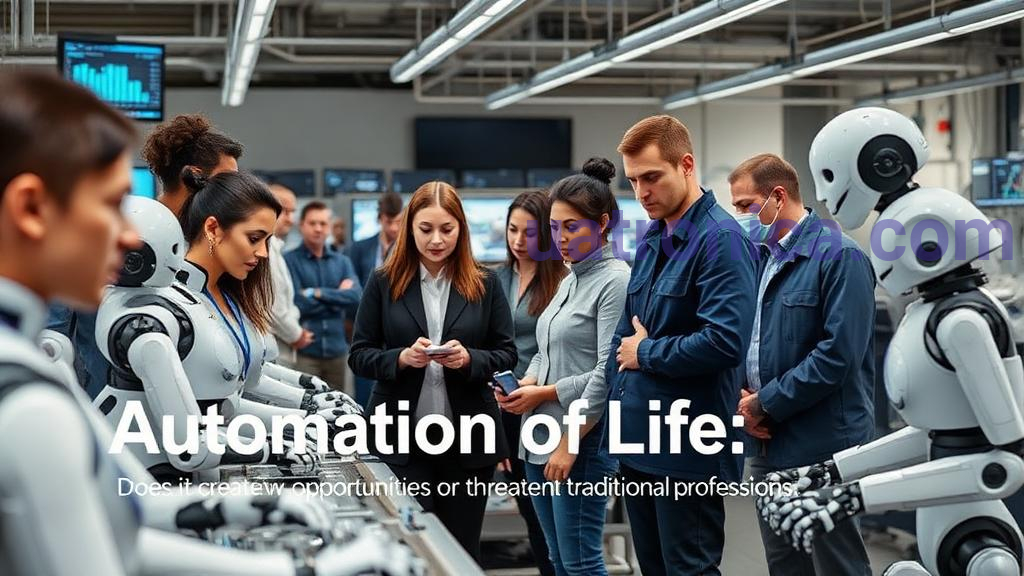
Despite all the benefits of automation in our lives, its impact on the labor market is mixed. On the one hand, new technologies are creating new professions that require high qualifications. On the other hand, automation threatens traditional jobs in industries where robots can perform the same tasks faster and cheaper.
This requires society to adapt to new conditions, re-profiling workers, and implementing educational programs aimed at developing skills relevant to the new digital world. For example, education in IT, programming, and robotics will become key to training new personnel.
Social and ethical challenges of life automation
The automation of life also brings with it social and ethical challenges. These include issues of data security, user privacy, and the potential discriminatory aspects of technology. It is important to ensure the protection of information that is accumulated in the process of automation and to have an active discussion about the problems associated with automated solutions. Public discussion on these aspects is critical to ensuring the responsible implementation of new technologies.
The interdependence of automation and technological ethics
The issue of ethics in automation is becoming increasingly important. It is necessary that developers adhere to ethical standards, creating technologies that are not only effective, but also do not harm society. For example, robotic systems should be designed taking into account their impact on the labor market to prevent social division.
The future of automation and robotics
Trends and innovations
The future of automation and robotics promises even greater innovation. Advances in artificial intelligence, big data, and communication technologies are creating the conditions for the expansion of automated solutions in everyday life. The ability to integrate different technologies, such as IoT and blockchain, opens up new horizons for business and society as a whole.
Forecast of robotics development in the coming years
In the coming years, we can expect further developments in robotics, including more self-learning systems and robots that adapt to their environment. This progress is also intended to increase productivity in various areas, making life more comfortable and safe. Projects such as automated supermarkets and delivery services will continue to grow in popularity. The use of robots in everyday areas such as healthcare and service promises significant changes.
Conclusion
The automation of life is changing our existence, creating new opportunities and rules of the game in many aspects of social and economic activity. Despite the challenges it poses, the introduction of modern technologies opens doors to development, efficiency and convenience. We need to embrace these changes, explore new solutions and learn to live in an era of constant technological innovation.
If you are interested in learning more about electronic components that can be used in automation, we recommend visiting our site to view the product range or learn about specific products, such as EEU-FC1V221B-PAN and KLS1-207-2-20-S KLSIt is important to continue discussing the social aspects of technology, learn to adapt in the face of rapid change, and look for ways to improve the quality of our lives through innovation.