



Technology in Education: How Are Innovations Changing the Learning Process?
Modern technologies have become an integral part of the educational process, their impact is felt in all aspects of education. Thanks to recent innovations, learning has become more exciting, accessible and effective. But what exactly are the technologies shaping the educational landscape today? What are their benefits and challenges? This article examines in detail how technology is changing the educational process, and also provides predictions about the future of education.
Technological innovations in the educational process
Introducing electronic components into training
Electronic components such as interactive whiteboards, multimedia tools, and mobile devices are expanding learning opportunities. For example, interactive whiteboards allow teachers to demonstrate complex material through video and graphics, opening up new horizons for student interaction with educational content.
- Interactive whiteboards allow you to interact with the material in real time.
- Multimedia presentations stimulate interest in learning, making students remember information better.
Additionally, mobile devices and tablets are influencing teaching methods. Many schools are implementing these gadgets for completing assignments and working on projects, which greatly increases the accessibility of resources.
- Students can access educational resources from anywhere.
- Tablets support students' independent work by providing the necessary tools for learning.
Online learning as the new standard
In today's information society, online learning has gained popularity due to its flexibility and accessibility. Students can study at their own convenience, which is an important element of the new educational paradigm.
- Online courses provide access to the knowledge of teachers from around the world.
- A flexible study schedule allows you to plan your time more effectively.
However, distance learning is not perfect. It also has its challenges, such as the lack of physical interaction, issues with self-discipline, and access to technology, which can complicate the learning process.
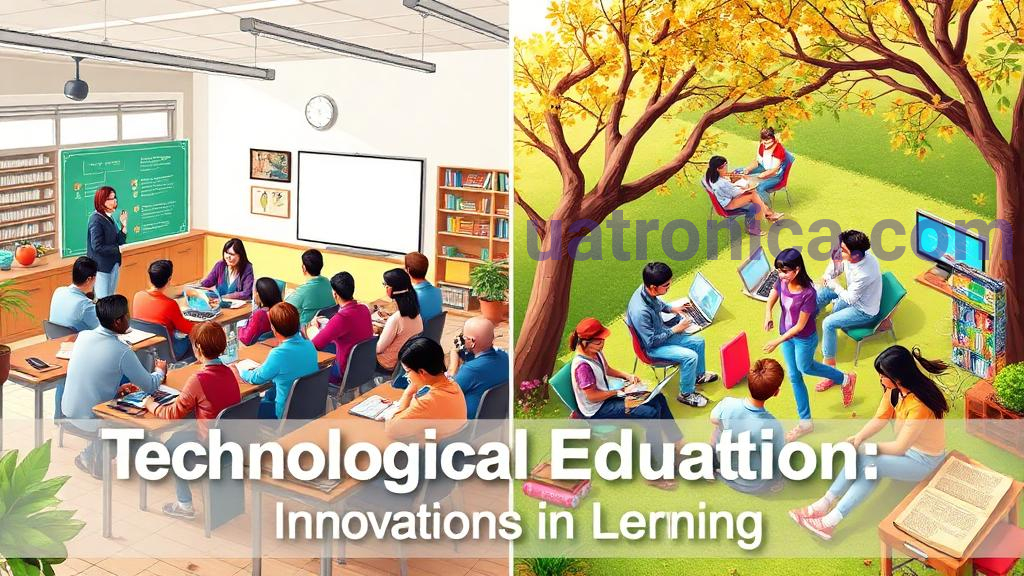
Comparison of traditional and online learning
| Aspect | Traditional learning | Online learning |
|---|---|---|
| Flexibility | Limited, fixed hours | High, flexible schedule |
| Access to resources | Limited to class | Access from anywhere |
| Social interaction | Direct communication | Virtual interaction |
| Feedback | Fast and direct | It may take a while. |
Psychological and social aspects of technological education
The impact of new technologies on learning style and information perception
With new technologies, not only the format of learning is changing, but also the style of information perception. Research shows that students perceive visual and interactive learning methods better, as these technologies activate different channels of perception.
Additionally, learning through multimedia resources improves students' ability to remember material. Therefore, the use of videos, graphics, and interactive exercises is becoming a new standard for effective learning.
The role of social networks in the educational process
Social media is becoming an important part of the educational process, allowing students to create communities to share knowledge and experiences. They also open up new opportunities for group work and projects.
- Students can interact with peers, exchange ideas and experiences.
- Social networks can be used to organize and manage group projects.
Creating digital etiquette is also an important aspect, as learning on social media requires following certain rules of communication and interaction.
Inclusivity and access to technology education
Technology for students with special needs
Digital education should ensure equal access to learning for all students, including those with special needs. Modern technologies offer specialized programs and equipment that significantly facilitate the learning process.
- Adaptive learning software helps to accommodate individual learning styles.
- Specialized devices, such as reading gadgets, can make access to learning materials much easier for every student.
Problems of access to resources and educational platforms
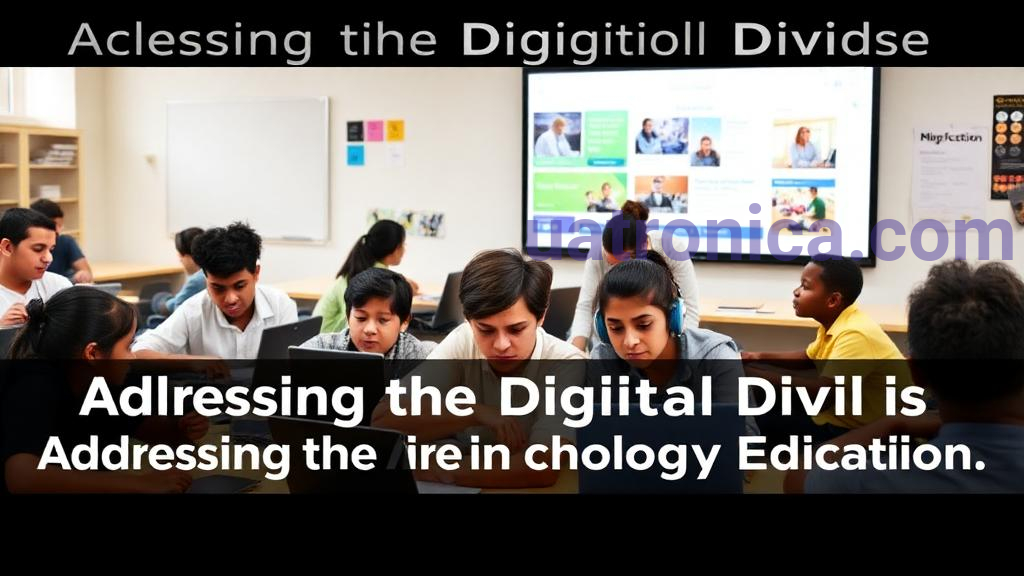
There is a digital divide: not all students have access to modern technologies, which complicates the learning process. The lack of internet or necessary devices can create serious inequalities in learning opportunities.
- Limited access to resources makes it difficult to learn new knowledge.
- Many educational platforms require payment, which may be unaffordable for some families.
Initiatives to improve access to technology education are becoming increasingly important. Educational institutions, government organizations, and private companies are working on programs to provide the necessary resources.
The future of technological education
Forecast of the development of technologies in education
Despite the changes already made, we are only at the beginning of a technological revolution in education. In the near future, artificial intelligence, adaptive learning systems, and virtual reality will play an important role in creating interactive learning environments.
The role of educators in a technological educational environment
As the educational environment changes, the role of educators is also being reshaped. They are becoming learning facilitators, meaning that their role is not just to impart knowledge, but also to help students navigate and use vast amounts of information and technology.
Preparing future generations for the challenges of today
In addition, it is important to develop 21st century skills - critical thinking, creativity, teamwork and problem-solving. Technology education must prepare students for a rapidly changing world in which technology is becoming the basis of all areas of activity.
Conclusions
Technological education has a powerful impact on the modern educational process. Thanks to new technologies, teachers and students have unlimited opportunities for effective learning and collaboration. It is important not only to adapt to changes, but also to use these innovations to maximize the potential of each student. Today, it is necessary to introduce modern technologies in educational institutions to prepare the younger generation for the challenges of the future.
You can learn more about electronic components and technologies that can improve the learning process on the website UatronicaFor example, you can view a specialized product suitable for educational purposes at here.
Stay tuned for news and developments in technology education as research in this area continues.